The hospitality industry is one of the most competitive digital battlegrounds on the planet. You are competing with OTAs -- Booking.com, Expedia, Hotels.com -- who spend hundreds of millions of dollars annually on performance marketing. You are competing with platforms that take 15-25% commission on every booking you generate through them. You are competing with Google's own hotel search product, which pushes organic results below the fold and favours its own comparison interface.
And yet we've found ways to win. Working with hotel and travel brand clients across multiple countries from our Houston TX base, we've identified the specific combination of SEO, paid media, email, and social strategy that allows independent properties and boutique hotel groups to compete effectively -- and shift an increasing proportion of bookings away from OTA channels over time.
This is the complete playbook. It's long because the problem is genuinely multi-layered. Each section addresses a distinct battlefield.
The Unique Challenge of Hospitality Digital Marketing
Before we get to tactics, it's important to name the structural problem that makes hospitality digital marketing categorically different from most other industries.
OTA dependency is both a safety net and a trap. Hotels averaging 40-60% of bookings via OTAs -- a figure consistent with Phocuswire's industry data -- are profitable on paper but fragile in reality. When Booking.com changes its algorithm, adjusts its commission structure, or de-ranks your property after a negative review cluster, your revenue drops immediately and you have no direct relationship with the customers who previously booked through them.
The goal of any serious hospitality digital strategy is to shift direct booking percentage from OTA-dependent to 50%+ direct over a 24-month horizon. This is achievable. We've seen it done at properties of varying sizes across different markets. It requires consistent investment across multiple channels simultaneously -- which is why it takes time -- but the economics make it unambiguously worth pursuing.
The three battlefields that determine your direct booking rate are search (organic and paid), social media, and email and loyalty. We treat these as interconnected -- a guest discovers you through organic search or social, books direct or through an OTA, and then the quality of your email and loyalty program determines whether their next stay is direct. Getting any one of these right while neglecting the others produces partial results. Getting all three right produces compounding growth.
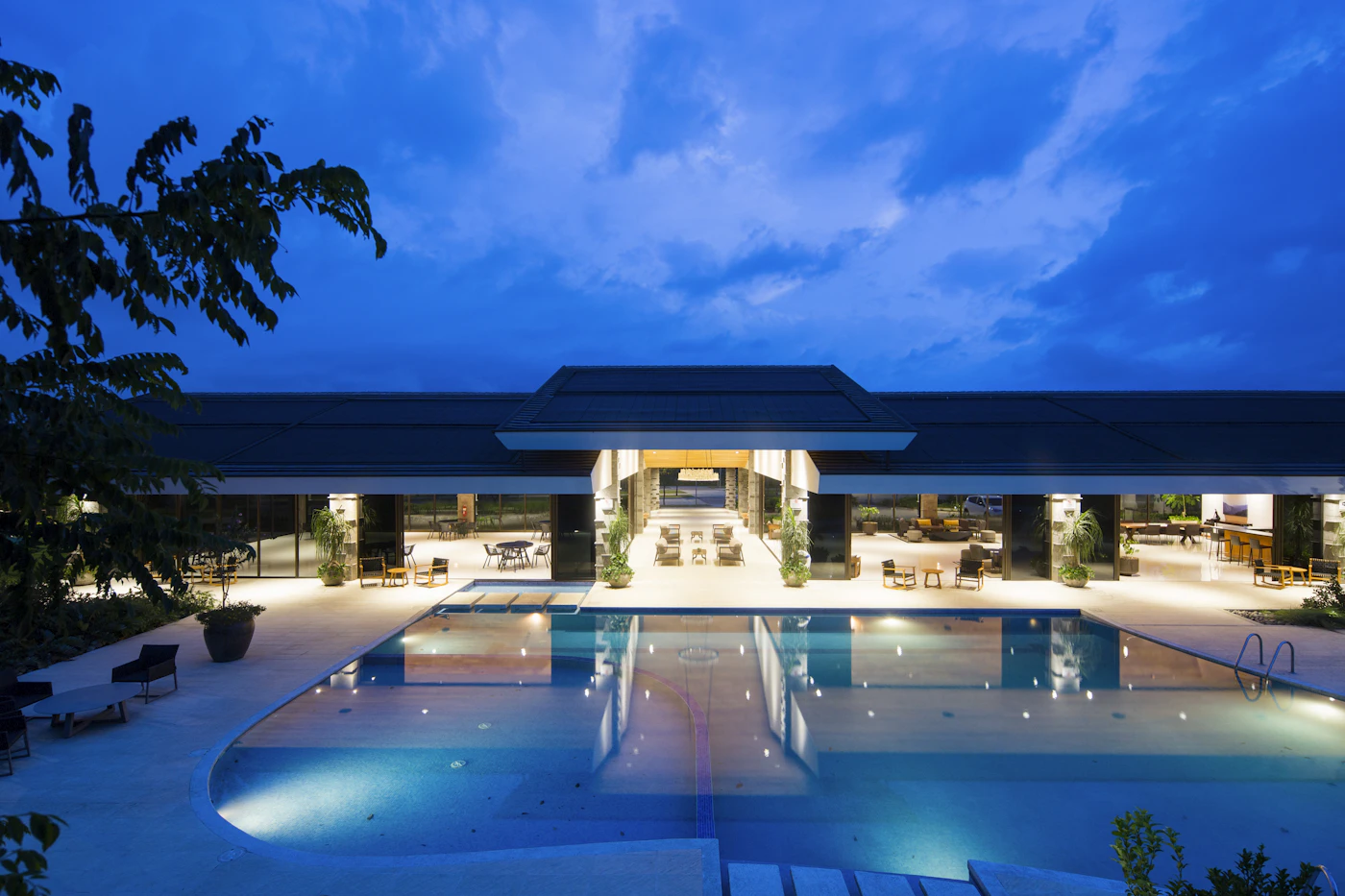
Independent hotels and boutique groups face OTA commission rates of 15-25%. A disciplined multi-channel digital strategy is the path to reclaiming direct booking revenue.
SEO for Hotels: Beyond "Best Hotels in [City]"
The first thing we tell every hotel client is this: you cannot win on category-level keywords. "Best hotels in Houston," "boutique hotels London," "hotels near Times Square" -- these results pages are dominated by TripAdvisor, Booking.com, Expedia, Google Hotels, and occasionally a local news article. An independent property's domain authority will not compete with these platforms on broad terms, and attempting to do so wastes content budget that could be winning achievable keywords.
The winning SEO strategy for hotels is long-tail ownership combined with destination content authority.
Long-tail keyword strategy. "Boutique hotel with rooftop pool in Midtown Houston," "romantic weekend hotel Houston late checkout," "hotel near NRG Stadium Houston," "pet-friendly hotel Houston Medical Center" -- these are terms with genuine search intent that your property can realistically rank for. The search volume is lower per term, but the booking intent is higher and the competition is far thinner. A property ranking for 200 long-tail terms outperforms one trying to rank for 5 broad terms in almost every case we've seen.
Destination content strategy. A hotel's website should be the best local travel guide for its area. This means destination guides ("the best restaurants within walking distance of our Houston Galleria property"), local experience content ("how to spend 48 hours in the Museum District"), and event-specific landing pages ("accommodation near the Houston Livestock Show and Rodeo," "hotels near Toyota Center for Rockets games"). This content ranks for terms travellers search before they know which hotel they want, which means your property enters the consideration set at the research stage rather than only at the comparison stage.
Local SEO foundations. Your Google Business Profile is more important than most hotels treat it. Every review needs a response within 24 hours -- positive and negative alike. Your profile information (hours, amenities, photos, services) needs to be complete and current. Citation consistency across 200+ local directories matters for Local Pack rankings. TripAdvisor research indicates that hotels responding to reviews see 12% higher booking volume -- the relationship between review engagement and booking performance is direct and measurable.
AEO: Answer Engine Optimisation. When a potential guest asks ChatGPT, Perplexity, or Google's AI Overview "what are the best boutique hotels in Houston for a business trip," is your property in the answer? This is increasingly where travel research happens, particularly for younger demographics. Structured schema markup, entity building through consistent press coverage and mentions, and content that directly answers specific questions ("does [Hotel Name] have airport transfer service?") all contribute to AI visibility. See our broader article on why traditional SEO is no longer sufficient for the full AEO framework.
Google Ads for Hotels: Winning Without Infinite Budget
Paid search for hotels operates differently from most other industries because Google has built a dedicated booking-intent product -- Google Hotel Ads -- that sits above the standard paid search results. Understanding how to use this product is the single most important paid media skill for any hotel marketing team.
Google Hotel Ads (Meta Search). Google Hotel Ads allows hotels to bid directly in the hotel comparison interface that appears when someone searches for a specific property or hotel category with dates selected. You're bidding against OTAs for the same traveller who is ready to book. The critical advantage: your direct rate competes against OTA rates in real time. When a traveller can see your direct booking price alongside Booking.com's price in the same interface, and your direct rate is the same or better, a significant proportion will book direct -- particularly if you add a direct booking incentive ("Book direct for guaranteed best rate + free breakfast").
Branded search protection. This is non-negotiable. If someone searches "[Your Hotel Name] booking" and you are not bidding on your own brand terms, an OTA will buy that click, take the booking, and charge you a 20%+ commission on a guest who was already looking for you specifically. The ROAS on branded search campaigns is almost always the highest of any campaign in a hotel's account. It is also the lowest volume. Both facts are true simultaneously.
Non-branded long-tail campaigns. Campaigns targeting specific room types, amenities, and neighbourhood terms on Google Search. These run alongside the Hotel Ads product and capture intent signals at an earlier stage of the research process. Lower conversion rates than branded campaigns but higher volume, and the traffic captured here is often less OTA-dependent because it represents travellers still in the research phase.
The budget split we recommend for most independent hotel clients as a starting point: 50% Google Hotel Ads meta search, 30% branded search protection, 20% non-branded long-tail. Adjust based on performance data after 60-90 days. For more on Google's Performance Max product as it applies to travel, see our article on Google Ads Performance Max in 2026.
Ready to shift more bookings to direct?
We've built direct booking growth systems for hospitality clients across multiple markets. Book a free 30-minute strategy call with Phillip to get a frank assessment of where your property sits today and what a realistic 12-month growth roadmap looks like.
Book a Free Strategy Call →Meta Ads for Hospitality: Filling Shoulder Seasons
Peak season fills itself. If you're a well-located Houston property in January during the Super Bowl run-up, or a beach resort property over a holiday weekend, your occupancy problem is solved by geography and timing. The ROI battle in hospitality is shoulder season -- the weeks when rooms are available, demand is moderate, and the difference between 60% and 85% occupancy determines whether the month is profitable.
Meta ads are the primary lever for shoulder season and distressed inventory management. Here is how we use them.
Retargeting website visitors who didn't book. This is the strongest ROI campaign type in hotel Meta advertising, consistently. Anyone who visited your website, clicked through to the booking engine, and selected dates without completing a reservation has demonstrated high intent. Retargeting this audience with a direct booking incentive ("Complete your booking and get 10% off") converts at rates 3-5x higher than cold audience campaigns.
Lookalike audiences from past guest email lists. Upload your CRM email list to Meta (hashed, privacy-compliant) and build a lookalike audience. Meta finds users whose behaviour and profile match your existing guests. This is your most efficient prospecting audience because it's built on actual booking data rather than interest targeting assumptions.
Interest-based prospecting for high-value travellers. For properties targeting specific guest profiles -- business travellers, luxury leisure, family groups, international visitors -- Meta's interest targeting combined with demographic filters allows reasonably precise audience construction. These campaigns have lower conversion rates than retargeting but serve a top-of-funnel awareness function that feeds the retargeting pool over time.
Creative that actually performs. In our testing across hotel Meta campaigns spanning multiple markets, real property photography consistently outperforms professional lifestyle video, which outperforms stock imagery. Authentic shots of actual rooms, actual amenities, and actual local experiences at the property produce higher CTR and lower CPM than anything produced in a studio. If your photography budget is limited, invest it in one good smartphone photography session at the property before any other creative production.
Offer structure. "Book direct for 15% off your first night + complimentary breakfast" consistently outperforms generic "Book now at [Hotel Name]" messaging by a factor of 3-4x in CTR and conversion rate in our client campaigns. The direct booking incentive needs to be specific and tangible. Vague value propositions ("best rate guaranteed") do not move numbers the way that concrete offers do.
Email and Loyalty: The Most Underused Channel in Hospitality
In our experience working with hotel clients across multiple markets, the email database is consistently the most underused asset the property owns. Most hotels send a confirmation email, a post-stay review request, and occasional promotional blasts with no segmentation and no sequence logic. The potential is dramatically higher.
Pre-stay sequence. The period between booking confirmation and arrival is one of the highest-engagement windows in the entire guest journey. The sequence we implement for hotel clients runs as follows: immediate booking confirmation with check-in instructions and local area welcome information, a 7-day pre-arrival email offering room upgrades, spa bookings, early check-in options, and curated local experience recommendations, and a 2-day arrival email with a personal welcome tone and practical day-of logistics. Each of these emails serves a dual purpose: it improves the guest experience and it generates ancillary revenue from upsell opportunities.
Post-stay sequence. The 30 days following a guest's departure are the most critical for re-booking intent. A thank-you email sent within 24 hours of checkout (personalised by name and stay details) sets the tone. A review request at 14 days captures feedback while the stay is still recent. A targeted return offer at 30 days -- with a specific date window ("Come back this autumn and get 20% off") -- captures re-booking intent at the moment when past-stay nostalgia is still present and competing commitments haven't filled the calendar.
Loyalty without a formal points program. Large hotel chains have loyalty programs with enormous infrastructure behind them. Independent properties often assume they cannot compete. In our experience, you can build meaningful loyalty behaviour without a formal points system by doing the following: segment repeat guests in your CRM, give them early access to limited availability periods and popular dates, acknowledge their stay history in all communications ("Welcome back -- this is your third visit with us"), and give them a direct line to the property rather than routing them through booking platforms. This creates the feeling of recognition and privilege that loyalty programs deliver, at a fraction of the cost.
Bain and Company's research consistently shows that repeat customers spend significantly more and are more resistant to competitive offers than new customers. In hospitality specifically, the combination of higher average spend and near-zero acquisition cost for a returning guest makes email and loyalty the highest-ROI channel in the full marketing mix once the database reaches critical mass. For the detailed email sequence framework we use across industries, see our article on email sequences that convert.
Social Media for Hotels: Instagram and TikTok Are Not Optional
We understand the temptation to treat social media as a low-priority channel when occupancy targets and OTA dependency are the pressing business problems. It is a mistake. Social media -- specifically Instagram and TikTok -- now serve as the primary travel discovery platforms for a significant proportion of the booking-intent audience, particularly travellers under 40.
Instagram. Still the primary social platform for travel discovery across all demographic groups. The format that consistently generates the best organic reach for hotel accounts in our experience is Reels -- short-form video showing the property, the surrounding neighbourhood, behind-the-scenes property preparation, and guest experiences. Static photography performs well for engagement but Reels drive reach to non-followers. A consistent posting cadence of 4-5 times per week on Instagram is the minimum for meaningful organic growth.
TikTok. The fastest-growing travel discovery platform for the under-35 demographic, and the only major social platform where organic reach to non-followers remains genuinely accessible without paid amplification. The formats that work for hotels on TikTok are "hotel room reveal" content (showing the room from the hallway door, building to the full property view), "hidden gem" positioning ("the best hotel in Houston most people have never heard of"), and local experience content shot from a guest's perspective. Properties with no video budget have generated millions of views with a smartphone and a willing staff member.
UGC (User-Generated Content) strategy. The content guests create is more trusted by other potential guests than anything the hotel produces. A systematic approach to incentivising guest content creation -- a small direct booking discount for a tagged post, a free welcome drink for a tagged story, a mention in the property's own content -- generates a continuous stream of authentic content that functions as permanent social proof. Even a modest UGC programme producing 10-15 pieces of guest content per month significantly amplifies organic reach beyond what the property could achieve through first-party content alone.
Response strategy. Social algorithms on both Instagram and TikTok reward accounts with high engagement rates. Replying to every comment on every post and responding to every DM within 2 hours materially improves your account's distribution. We've seen hotel accounts double their organic reach simply by systematising their response behaviour without changing anything about their content. This is the lowest-effort high-impact adjustment most hotel social accounts can make immediately.
The Metrics That Tell You If Your Strategy Is Working
There are many metrics you can track in hospitality digital marketing. These are the ones that tell you whether your overall direct booking strategy is moving in the right direction.
Direct booking percentage. The fundamental strategic metric. Target: 50%+ within 24 months. Industry benchmark: approximately 28% direct according to Skift Research's 2024 data. If your direct booking percentage is not increasing quarter-on-quarter, something in the strategy is not working and you need to diagnose which channel is underperforming.
RevPAR (Revenue Per Available Room). The hospitality industry's universal performance metric. RevPAR = Average Daily Rate x Occupancy Rate. An improving direct booking mix should, over time, produce improving RevPAR because you're retaining commission costs as margin. If RevPAR is flat while direct bookings are increasing, investigate whether direct booking incentives are discounting too aggressively.
Cost Per Direct Booking. Total digital marketing spend divided by total direct bookings. Your target is to keep this below the OTA commission rate as a percentage of your average booking value. If your average booking value is $400 and OTA commission is 20% ($80), your cost per direct booking should be below $80 to be financially justified. Most well-run campaigns achieve $30-50 per direct booking once optimised.
Email revenue attribution. What percentage of your direct booking revenue can be attributed to email campaigns and sequences? This number should grow as your database scales and your automation sequences improve. Properties with mature email programmes see 25-40% of direct revenue attributable to email.
Houston TX-specific note: For properties in the Houston market, aligning your paid media campaigns with the city's major event calendar produces significantly better results than running campaigns in isolation. The Houston Livestock Show and Rodeo (February-March), major conferences at the George R. Brown Convention Center, Rockets and Texans home game schedules, and any Super Bowl-adjacent activity should all trigger specific campaigns 60-90 days in advance. Travellers booking for these events research accommodation earlier than average leisure travellers, and the booking window is more concentrated. If your campaigns aren't live before that window opens, you're not in the consideration set.
The complete digital growth picture for a hospitality brand requires consistent execution across all of these channels simultaneously. No single tactic -- not even the best-run Google Hotel Ads campaign -- moves the direct booking needle on its own. But the compounding effect of strong SEO, intelligent paid media, a working email sequence, and active social presence creates a growth trajectory that becomes increasingly difficult for OTAs to reverse. We've seen it work in markets from Houston to London to Lagos. The fundamentals are the same.
If you manage a hotel or travel brand and want an honest assessment of where your current digital presence stands, get in touch or book a free strategy call with our team. We offer a no-obligation audit of your direct booking performance and will tell you exactly where the highest-impact opportunities are. See our full digital services for the hospitality channel.