Performance Max promised to be the future of Google Ads. Give Google your assets, your goals, your budget — and let the machine work. In theory, that sounds great. In practice, we have inherited enough PMax horror stories to fill a separate blog. Overspend on Display with zero conversions. Branded search terms cannibalised. Asset groups mixing unrelated products and generating irrelevant traffic. Reporting dashboards that look impressive but tell you nothing actionable.
Here is what is actually happening inside PMax, what most agencies are getting wrong, and what we do differently to make it perform for our clients here in Houston and beyond.
What Performance Max Actually Does
Performance Max is a single campaign type that runs across all of Google's inventory simultaneously: Search, Shopping, Display, YouTube, Discover, Gmail, and Maps. You provide the assets — headlines, descriptions, images, videos, logos — and Google's AI decides where to serve them, when to serve them, and to whom.
Inside PMax, traditional ad groups are replaced by asset groups. Each asset group contains your creative inputs and is associated with a final URL. Google's Smart Bidding system — using either a Target CPA or Target ROAS goal — governs how budget is allocated across placements and audiences. The full technical spec is documented in Google Ads Help, but the practical reality is that PMax gives Google unprecedented control over where your money goes.
The appeal of PMax is real: it can reach customers at multiple touchpoints across the purchase journey in a single campaign. A prospect searches for your service on Google Search, sees a YouTube pre-roll ad, then encounters a Discover feed ad two days later — all driven by one PMax campaign. When it is structured correctly, this multi-surface reach is genuinely powerful. The problem is that "structured correctly" is not the default state when most agencies launch it.
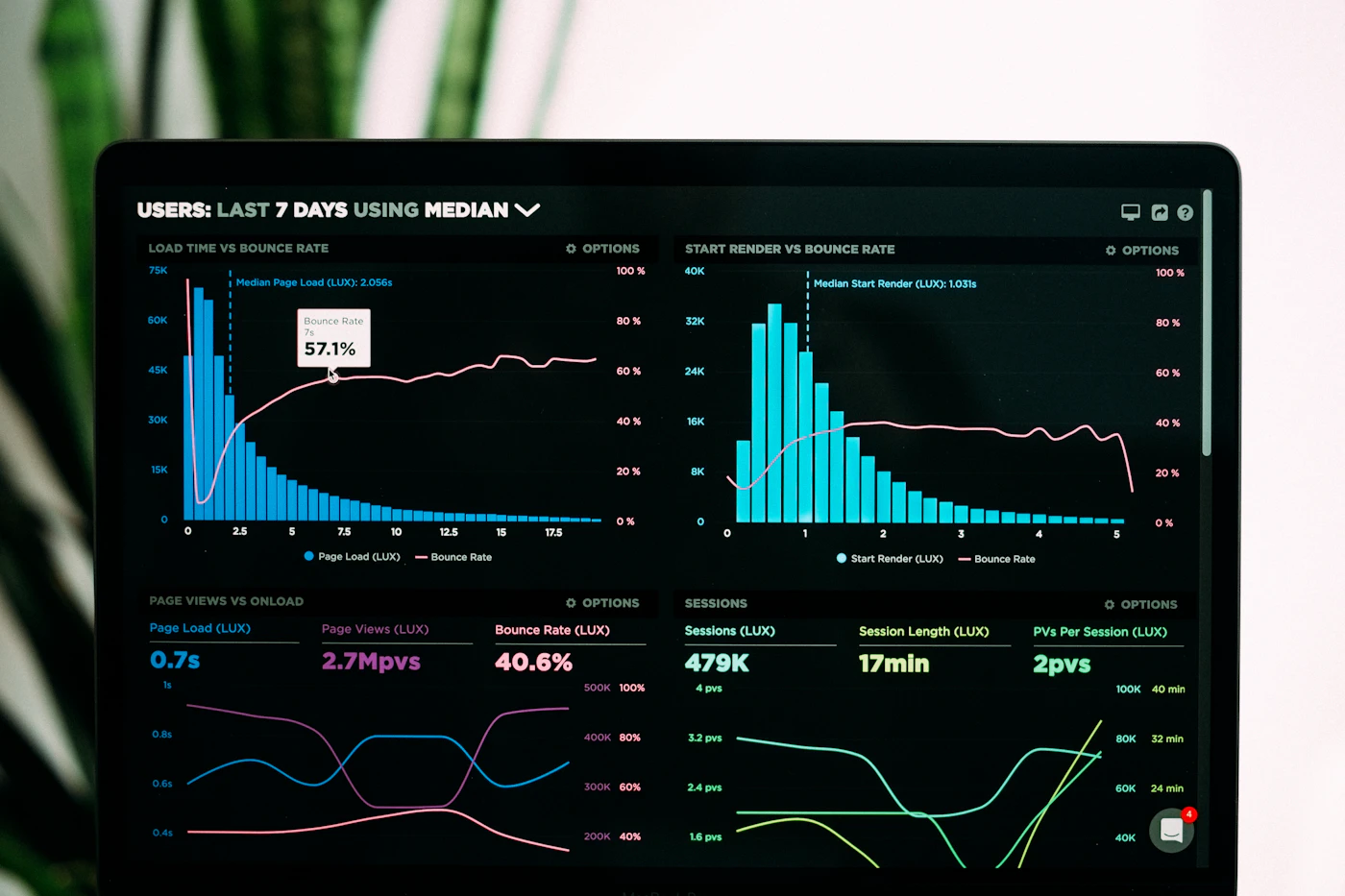
PMax consolidates Search, Shopping, Display, YouTube, Discover, Gmail and Maps into one campaign — but that power cuts both ways if the setup is wrong.
The Problems We See Agencies Create With PMax
We have taken over dozens of Google Ads accounts in the past two years where PMax was running but not performing. The problems cluster into five recurring patterns.
Problem 1: Brand cannibalisation. PMax will bid on your own branded search terms if you do not explicitly exclude them. This means you are paying for clicks from people who were already going to find you — and inflating your attributed conversions in the process. The fix is straightforward: use brand exclusions (available since 2023) and run a separate Brand campaign with manual or enhanced CPC bidding. Keep brand traffic protected and accounted for separately.
Problem 2: Opaque reporting. PMax's native "Insights" tab is marketing material, not operational data. You cannot see keyword-level search term data. You cannot see individual placement data. You see asset performance labels — Low, Good, Best — which indicate relative performance within the account but tell you nothing about absolute performance benchmarks. Decisions made on this data alone are educated guesses at best.
Problem 3: Overly broad asset groups. Mixing all your products or services into a single asset group destroys relevance. A user searching for "Houston web design" should not be served an ad that also references your SEO service, your paid media offering, and your automation package. Relevance is a performance signal. One asset group per product category or service type is the structural baseline.
Problem 4: No negative keywords. PMax does not support campaign-level negative keywords in the traditional sense, but account-level negative keyword lists apply and are frequently ignored. Without them, PMax will happily spend budget on irrelevant search queries that share surface-level similarity with your targets.
Problem 5: Underfunded campaigns. PMax requires a minimum of 30 to 50 conversions per month to exit the learning phase and optimise meaningfully. We see accounts running PMax at $500 per month expecting results. The math does not work. At typical conversion rates, $500 per month rarely generates 30 to 50 conversions. The campaign never learns, and the client concludes PMax does not work — when the actual problem is that it never had enough signal.
How We Structure PMax Campaigns That Actually Perform
When we set up PMax for a client, we start with campaign objective separation. One PMax campaign for new customer acquisition, one for existing customer cross-sell if applicable. These have different ROAS or CPA targets, different asset groups, and different audience signals. Mixing new and existing customer objectives in one campaign creates a bidding conflict.
Asset group structure follows a strict rule: one asset group per product category or distinct service type. For an e-commerce client selling across three product categories, that means three asset groups minimum. Each asset group has headlines, descriptions, and images that are specifically relevant to that category — not generic brand statements that could apply to anything.
Final URL expansion is a feature that allows Google to send traffic to any page on your website that it determines is most relevant to a given query. For most accounts we manage, we turn this off. Our clients have specific landing pages built and optimised for specific conversion goals. We do not want Google routing traffic to the homepage or a blog post because its algorithm decided that was a better match.
Audience signals are one of the highest-leverage inputs in PMax and the most consistently underutilised. We upload:
- Customer email lists — segmented by LTV tier where possible
- Past purchaser lists
- In-market audience segments relevant to each product category
- Custom intent audiences built from competitor URLs and relevant search terms
Audience signals do not restrict who PMax can target. They give the algorithm a starting point — a warm signal that accelerates the learning phase. The distinction matters: you are not limiting reach, you are guiding the machine toward the right neighbourhood faster.
Is your PMax campaign actually performing?
We audit Google Ads accounts and identify structural problems that are costing you conversions. Book a free call to get a straight answer.
Book a Free Strategy Call →PMax vs Standard Shopping vs Search: When to Use What
The rise of PMax has not made other campaign types obsolete. There are clear scenarios where Standard Shopping and Standard Search campaigns still outperform PMax, and running the right mix is a strategic decision, not a default setting.
Standard Shopping still wins for accounts with a small product catalog or a single hero SKU where you need precise control over bidding, product prioritisation, and negative keyword management. When you have 5 products and know exactly which search terms should trigger each one, Standard Shopping gives you that control. PMax abstracts it away.
Standard Search still wins for high-intent branded terms and direct competitor targeting. If someone searches for your brand name, you want a Brand Search campaign that you fully control — not PMax absorbing that traffic and attributing the easy conversion to its own optimisation.
PMax wins for brands that have a complete Google product feed, are generating at least 50 monthly conversions, and have a library of creative assets ready across image, video, and copy formats. E-commerce brands at scale are the primary beneficiary. B2B service businesses with long sales cycles and low monthly conversion volumes are often better served by a Search-only approach.
The hybrid approach we often run: PMax alongside a Standard Shopping campaign for the same product catalog. This creates a natural competition for impressions. If Standard Shopping begins cannibalising PMax impressions significantly, it indicates a structural issue with the PMax asset groups. If both run without cannibalisation, the combined reach typically outperforms either alone.
Reporting Inside PMax: What You Can and Cannot See
Transparency is PMax's biggest limitation, and understanding what you can and cannot see is essential for making decisions that are not based on incomplete data.
What you can see inside PMax: campaign-level conversions and conversion value, asset group performance ratings, impression share, and auction insights data. These are useful but high-level.
What you cannot see: individual search terms triggering your ads (only broad search category groupings), individual placement URLs on Display and YouTube, and per-asset absolute performance data (only relative ratings within the account).
Our workaround for the search term gap: cross-reference the Search Terms report in Looker Studio dashboards pulling from linked Google Search Console data. GSC shows what queries drove organic traffic, which gives a directional signal for what PMax may be responding to on the paid side. It is not perfect, but it is better than nothing.
We also build monthly review cadences around what PMax does show: asset performance labels (which assets are rated Low, Good, or Best), conversion rate trends by asset group, and impression distribution across Google's inventory channels. If 80% of your PMax impressions are going to Display with a 0.8% conversion rate and 15% are going to Search with a 4.2% conversion rate, that is a structural signal that the campaign needs rebalancing.
The Results We Have Seen in Houston TX and Beyond
The difference between correctly structured PMax and default PMax is not marginal. It is the difference between a campaign that works and one that burns budget while generating plausible-looking numbers in the dashboard.
A Houston-based e-commerce client came to us with a PMax campaign that had been running for four months with a reported 2.1x ROAS. When we audited the account, we found that branded search terms accounted for 38% of all attributed conversions. Strip out the brand traffic that would have converted anyway, and the actual prospecting ROAS was below 1.2x — unprofitable. We restructured with 4 separate asset groups by product category, implemented brand exclusions, uploaded a segmented customer list as an audience signal, and added account-level negative keywords for irrelevant query categories. Within 60 days, reported ROAS reached 4.2x against comparable spend, and the brand traffic was correctly isolated in its own campaign.
A B2B services client was running PMax with a Target CPA goal. The campaign was spending 70% of its budget on Display network placements at a cost per lead 4x higher than their Search campaigns. PMax's automation had found it easier to generate form submissions from broad Display audiences than from high-intent Search, and had optimised toward volume over quality. The fix: exclusion lists for irrelevant Display placements, switching to a Target ROAS goal tied to lead quality scoring, and reducing PMax budget while increasing Search campaign budget. Lead quality improved measurably, and overall ROAS shifted from 1.8x to 3.1x.
PMax is a powerful tool. It is also a tool that will optimise toward the path of least resistance if you let it. Our job is to constrain that path to the outcomes that actually matter for our clients' businesses.
If you are running Google Ads campaigns and want a second opinion on structure, or if you are ready to talk about paid media strategy more broadly, read our Meta Ads playbook or our take on LinkedIn B2B content. You can also explore our paid media services or get in touch directly.